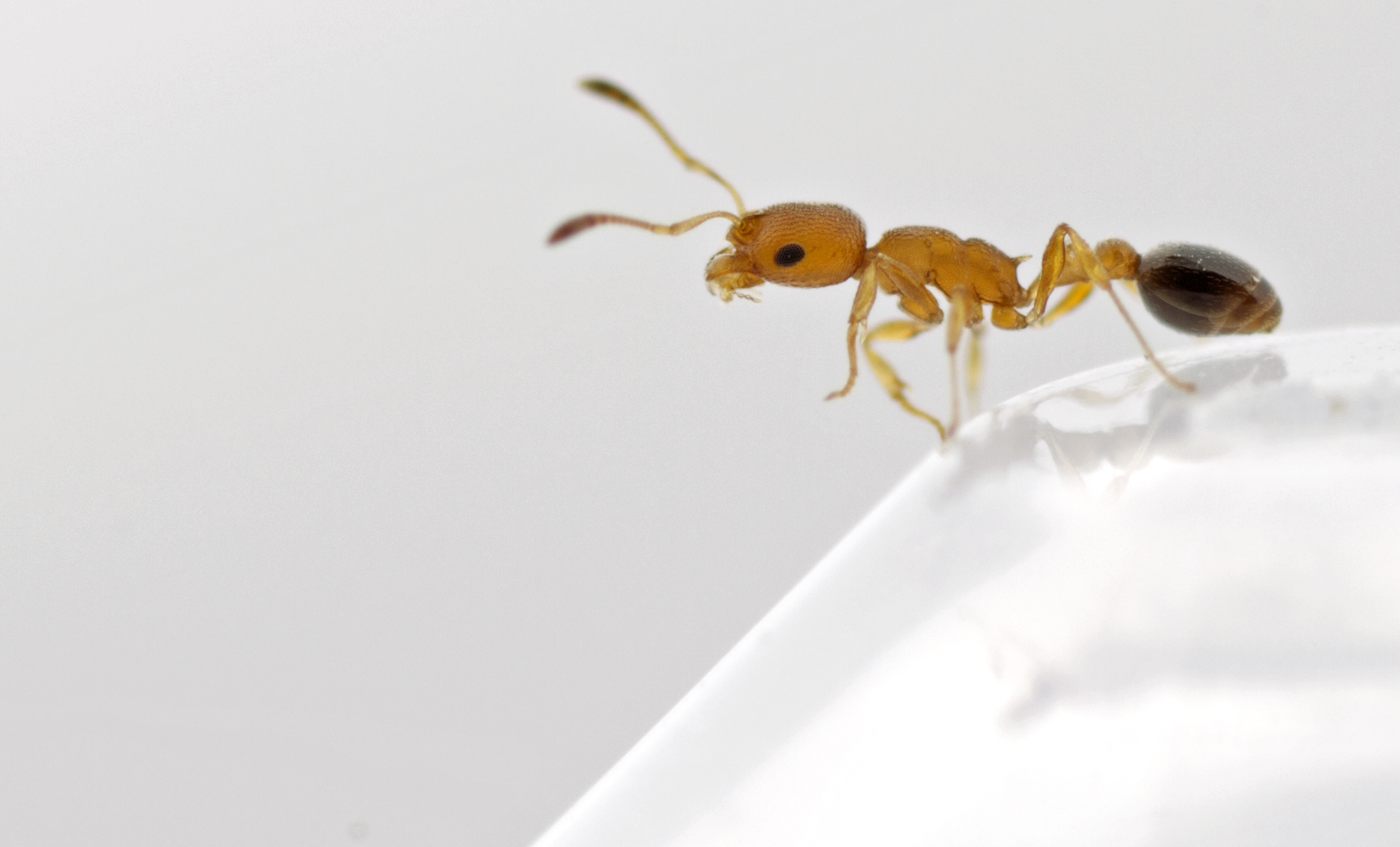
We study the ant Cardiocondyla obscurior, a species well-suited for experimental biology because of its small body and colony size and short lifespan. CoRe is dedicated to a holistic perspective and is highly interdisciplinary.
Aging
C. obscurior lives long compared to similar sized insects (e.g. D. melanogaster, N. vitripennis, T. castaneum). Late-life fitness gains explain decreasing mortality rates with age (Harrison et al. 2021, Jaimes-Nino et al. 2022), a strategy termed “continuusparity”. Queens and workers have similar standardized mortality rates, suggesting programmed aging (Jaimes-Nino et al. bioRxiv 2022, Jaimes-Nino & Oettler accepted).
Symbiosis
Worldwide populations differ in Wolbachia infection, and are isolated via unidirectional reproductive isolation (Ün et al. 2021, Ün et al. 2022). The endosymbiont Cand. Westeberhardia has one of the smallest genomes of any known gammaproteobacterial endosymbiont and a putative nutritional function (Klein et al. 2016, Jackson et al. 2022). How have they affected the evolution of the species?
Plasticity
Female caste is determined by late embryogenesis, likely via maternal effects (Schultner et al. 2023). Sex differentiation pathways have been co-opted to regulate female caste and male morph differentiation (Klein et al. 2016). Female caste development appears to be highly canalized and is not affected by topical juvenile hormone treatment (Brülhart et al. 2024). miRNA and mRNA expession patterns suggest that the sterile workers are neither “female”, nor “male” (Oettler et al. bioRxiv 2023).
Genome evolution
C. obscurior has the densest genome of any ant sequenced so far, and its genome is characterized by highly variable TE-rich regions (Schrader et al. 2014, Errbii et al. 2021). High recombination rates further generate genetic diversity (Errbii et al. 2024), maybe compensating for the low variability caused by a combination of haplodiploidy, inbreeding and frequent bottlenecks?
Rapid adaptation
New and Old World populations of C. obscurior exhibit signs of past introgression, and subtle patterns of genetic divergence (Errbii et al. 2021). Hypothenemus hampei, the Coffee Berry Borer, a major pest, invaded the island of Jamaica only ~40 years ago, and is our comparative genomic model for the study of rapid adaptation (Myrie et al. 2024, Errbii & Myrie et al. 2024).

 cardiocondyla.org